
Throughout the last decade, there has been a clear model for how a unicorn was built. Start with software, move fast, stay asset light, scale through distribution, and expand globally once you win your category.
This playbook produced some of the most recognizable companies of the 2010s. It also shaped how founders and investors evaluated opportunities, but this model is no longer the center of gravity.
An expanding share of billion-dollar companies is coming from deep-tech sectors like AI infrastructure, robotics, and defense. The shift is being driven by a new generation of experienced operators, faster paths to scale, and structural market tailwinds that reshape where value is created.
The Shift From Software to Systems
In the 2010s, the highest-growth companies lived in the digital world. They built software products, distributed them efficiently, and scaled without needing to touch physical infrastructure. This boundary is breaking down as today’s most important companies are building systems that extend into the real world.
In robotics, software controls machines. In defense, it powers autonomous systems and decision-making in real time. In manufacturing, it drives automation across entire production environments.
AI is further accelerating this shift as a layer enabling these systems to scale, but the shift is larger than AI alone. Software isn’t confined to digital products anymore; it’s becoming the operating layer for physical-world systems.
A new generation of unicorns is emerging, and once these companies reach product-market fit, they often scale far faster than the companies that came before them.
Scale Looks Different Now
Growth used to primarily result from acquiring users and layering on monetization.
Today, individuals adopt products. They share them with their team, and eventually, the entire organization is using the product as well. As the product becomes more central to how work gets done, spending increases, and the nature of the business alters as revenue compounds through usage and integration.
T2D3 used to be the indicator of elite performance, with triple revenue for two years, and then double for three. That path got you to one hundred million in revenue and put you on track for strong results. While that benchmark still exists, it no longer defines the frontier.
AI native and system-driven companies are compressing that timeline, and what used to take years now happens in months. The highest-performing companies are reaching scale at a pace that would’ve been unheard of decades ago.
Why This Moment Requires a Different Kind of Founder
The companies emerging from this cycle present different, and often more difficult, challenges than businesses in previous cycles.
They operate within industries shaped by manufacturing constraints, regulatory complexity, supply chain dependencies, and geopolitical pressure. Building requires technical depth, operational experience, and a firsthand understanding of how these systems function in the real world.
At the same time, market forces are driving demand. Labor shortages are creating urgency alongside governments prioritizing domestic manufacturing and resilient infrastructure. Defense priorities are shifting toward scalable, modern systems that can be quickly deployed and replenished.
These dynamics create opportunities for a different kind of founder. Many of today’s breakout companies are built by repeat operators with years of experience inside the industries they’re now rebuilding.
Where MVP Fits
This shift in unicorn profiles defines how we invest at MVP Ventures. We focus on companies building at the intersection of AI, hardware, and real-world systems. Across robotics, defense, infrastructure, and advanced manufacturing, we continue seeing a growing concentration of breakout outcomes.
We have also seen that supporting these companies requires more than capital. Founders operating in complex sectors need guidance in navigating certain complexities. This includes government relationships, talent, go-to-market execution, and increasingly sophisticated capital markets as they scale.
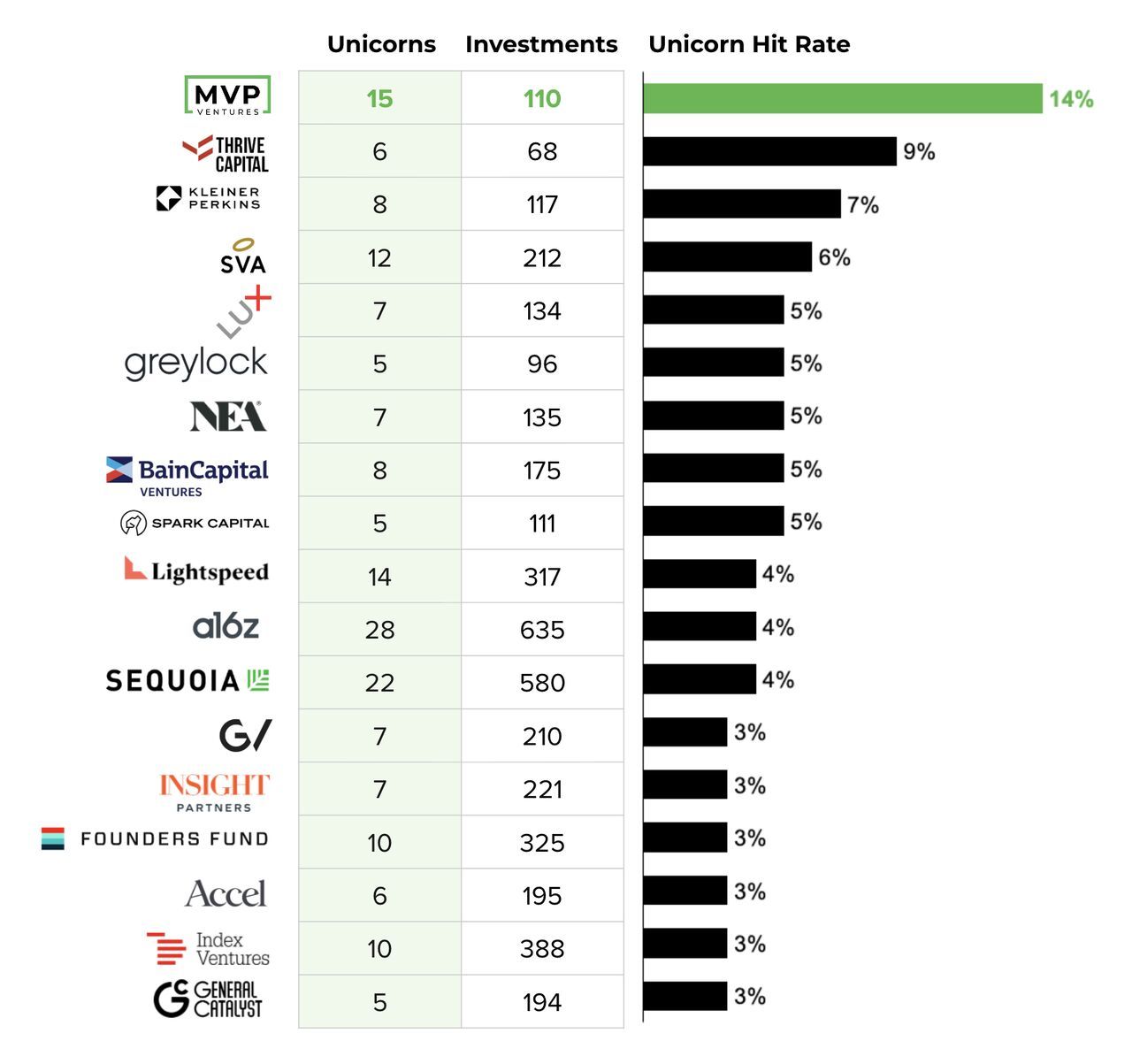
That is where the MVP model fits. We engage early, earn our place through execution, and stay hands-on as companies scale into category leaders. Over the last five years, that approach has resulted in 15 unicorns from 110 investments, across robotics, defense, infrastructure, and AI systems.
We believe this shift is still in its early stages. The next generation of category-defining companies will come from sectors requiring deep technical execution, faster scaling, and structural demand.
The playbook has changed, and the first firms that recognize where these outcomes come from will be the ones best positioned to support them.